
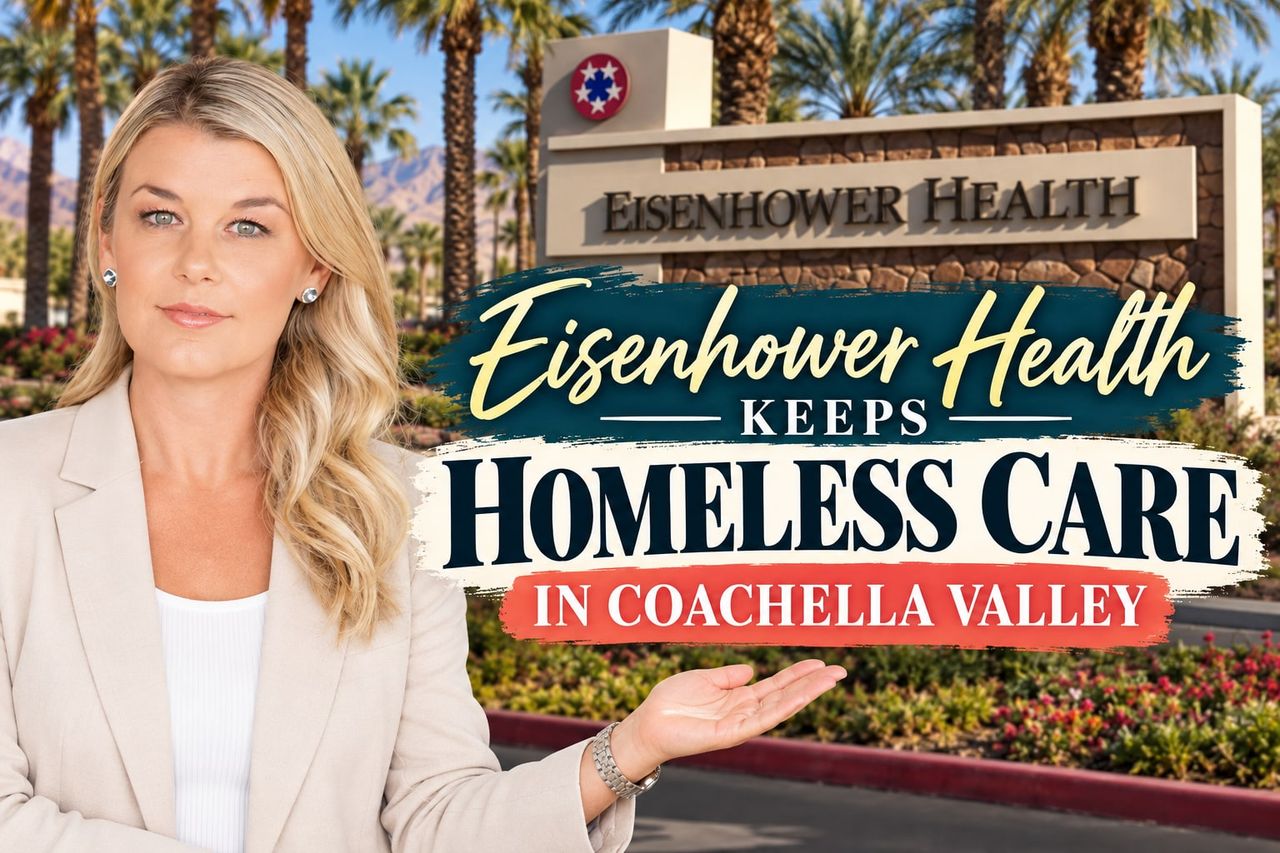
Eisenhower Health has taken over leadership of the Coachella Valley's Street Medicine program, stepping in to preserve a critical service that brings medical care directly to people living unsheltered across the desert region. The move is designed to keep care continuous and to expand the program's reach as need grows.
What the Eisenhower Health Street Medicine Coachella Valley Transition Means
Street Medicine programs bring healthcare workers out of clinics and into encampments, washes, and other places where people without housing actually live. Rather than waiting for a patient to show up at an emergency room, care goes to them. For Palm Springs and the broader valley, that matters because the region's homeless population has been visible and growing for years.
Eisenhower Health, the valley's largest nonprofit health system, absorbing this program signals that leadership at Eisenhower Health sees street medicine as a core community obligation, not an optional add-on. The transition is meant to ensure that no gap in service opens up during the handover, and that the program has the institutional backing to grow.
Why This Matters Beyond Healthcare
Homelessness affects how every part of a community functions. Business owners in Palm Desert, Cathedral City, and across the Coachella Valley have dealt with the visible strain of an unsheltered population without enough consistent medical support. Untreated illness cycles people through emergency rooms and back onto the street. Street medicine interrupts that cycle by meeting people where they are.
For residents and property owners, a stronger, institutionally supported street medicine program is one piece of a broader public health infrastructure. It does not solve homelessness, but it reduces the medical emergencies and ER burden that fall on the whole valley when preventive care is absent.
Programs like this also reflect how a community prioritizes its most vulnerable residents, which increasingly factors into how people think about where they want to live and invest.
What This Means For You
• Eisenhower Health's takeover provides long-term stability for a program that previously had uncertain support.
• Expanded street medicine reduces preventable emergency room visits, which benefits the broader healthcare system all valley residents use.
• Institutional investment in homelessness response signals that the valley's civic infrastructure is maturing around this issue.
• For anyone weighing quality of life across the desert cities, healthcare system strength is a real factor worth watching.
The Coachella Valley is a complex, spread-out region with challenges that do not stop at city lines. Eisenhower Health stepping in here is a clear sign that at least one major local institution is committed to meeting those challenges head-on. If you want to understand how community investment and livability connect to real estate decisions in the valley, explore more on our blog.
Tell us your budget, timeline, and priorities, and we will help you build a Palm Springs neighborhood shortlist.
Frequently Asked Questions
What is the Eisenhower Health Street Medicine program in the Coachella Valley?
The Street Medicine program brings medical care directly to people experiencing homelessness in the Coachella Valley, reaching them in the locations where they live rather than relying on clinic or hospital visits. Eisenhower Health has taken over leadership of the program to ensure the service continues and can expand to meet growing need.
How does street medicine affect Coachella Valley residents and property owners?
When people experiencing homelessness have access to consistent medical care, emergency room visits decrease and health outcomes improve for the broader community. For property owners and residents, a functioning street medicine program is part of the public health infrastructure that shapes day-to-day life and long-term livability across the valley.
Does Eisenhower Health serve the entire Coachella Valley or just Palm Springs?
Eisenhower Health operates across the Coachella Valley, with its main campus in Rancho Mirage and services reaching cities throughout the desert region. The Street Medicine program is similarly designed to cover the valley broadly, not just one city.
Sources
Related reading
• Palm Desert vs. Indian Wells for Retirees: A Straight-Up Comparison
• Día de los Muertos 2026: Celebrating the Coachella Valley's Rich Cultural Traditions
• St. Jude Dream Home Coachella Valley: What to Know About the $900K Giveaway