
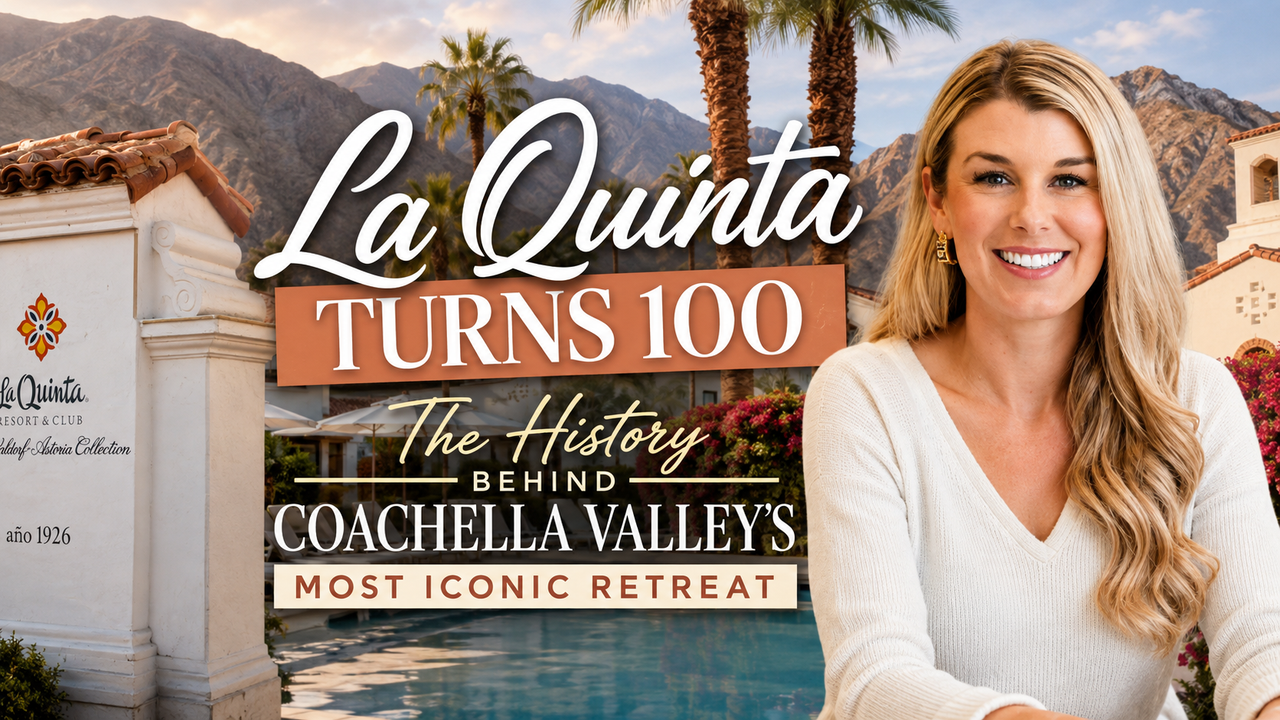
Walter Morgan opened La Quinta Hotel on December 26, 1926, with 20 adobe casitas tucked against the base of the Santa Rosa Mountains. No neon signs. No lobby bar. No road to speak of. He built it specifically so no one could find it easily — and the Hollywood crowd found it almost immediately.
That founding contradiction sits at the heart of why La Quinta Resort Turns 100: The History Behind the Coachella Valley's Most Iconic Retreat is a story worth telling carefully. The resort wasn't meant to be famous. It became famous anyway, and the city that grew around it took on its character.
A Hideaway That Refused to Stay Hidden
Morgan, a San Francisco developer, chose the site for its seclusion. The valley floor was largely date farms and desert scrub in the mid-1920s. The Santa Rosas provided a dramatic backdrop and a natural windbreak. The 20 original casitas were modest by any standard — thick adobe walls, tile roofs, a fireplace in each room. The idea was a place where guests could disappear.
Greta Garbo came. Frank Capra wrote the screenplay for "It Happened One Night" during a stay at the resort in the early 1930s. Bette Davis, Errol Flynn, Marlene Dietrich, and Ginger Rogers all checked in at various points during the resort's golden Hollywood decades. The guest registry from those years reads like a studio call sheet.
Capra's stay is the detail most locals cite, and it matters because it grounds the resort's history in something specific and verifiable. He didn't just visit. He worked there. The quiet and the desert light gave him what he needed to finish one of the most celebrated films of the 1930s. That's the resort doing exactly what Morgan designed it to do.
Golf, Growth, and the Making of a City
The resort added its first golf course in 1959. That decision changed the property's footprint and its relationship to the land around it. Golf brought a different kind of guest and, more importantly, a reason to stay longer than a long weekend.
By the time La Quinta incorporated as a city in 1982, the resort was already the anchor of the community's identity. The city didn't create the resort's prestige — the resort's prestige shaped what the city wanted to become. That sequence matters if you're trying to understand why La Quinta carries a specific character compared to the rest of the valley.
The Pete Dye-designed PGA West courses opened in 1986, and La Quinta became a serious golf destination, not just a celebrity retreat. The Mountain Course at PGA West hosted the Bob Hope Classic and drew professional tours. Golf development spread across the surrounding area through the late 1980s and 1990s, producing the gated course communities that now define much of La Quinta's residential market.
Today the resort sits on 45 acres and includes multiple pools, several restaurants, spa facilities, and access to the PGA West courses. What started as 20 casitas is now one of the larger luxury resort footprints in the valley.
La Quinta Resort Turns 100: Why the Centennial Matters Beyond the Party
The 100th anniversary in 2026 arrives with events, special programming, and the kind of marketing that accompanies any major milestone. That's worth acknowledging because it's easy to let the celebration obscure the more interesting question: what does a century of continuous operation actually mean in a place like the Coachella Valley?
A few things stand out. The resort survived the Depression, the post-war building boom, multiple ownership changes, and the valley's gradual shift from seasonal retreat to year-round destination. It outlasted other early desert hotels that opened with similar ambitions and closed within a decade. That longevity isn't an accident. The original site selection was smart, the architecture was suited to the climate, and the reputation for privacy gave it a durable market position.
For current residents of Palm Springs and the broader valley, the centennial is a useful reminder that the region's identity as a luxury desert destination isn't a recent marketing invention. It has roots. La Quinta Resort is one of the places where those roots go deepest.
For anyone exploring the valley's real estate market, particularly in the La Quinta and PGA West corridor, understanding that history adds context to why certain areas hold value the way they do. The resort anchors something real. You can read more about the communities surrounding it on the Craft & Bauer blog.
Frequently Asked Questions
When did La Quinta Resort open, and who founded it?
La Quinta Resort opened on December 26, 1926, founded by San Francisco developer Walter Morgan. He built 20 adobe casitas at the base of the Santa Rosa Mountains, intending the property as a secluded retreat with limited access.
Which celebrities and historical figures stayed at La Quinta Resort in its early decades?
Filmmaker Frank Capra wrote the screenplay for "It Happened One Night" at the resort in the early 1930s. Guests over the decades included Greta Garbo, Bette Davis, Errol Flynn, Marlene Dietrich, and Ginger Rogers, among many others from Hollywood's studio era.
What events are planned for La Quinta Resort's 100th anniversary in 2026?
The resort has announced special events and guest experiences to mark the centennial, honoring its Hollywood heritage, golf tradition, and desert architecture. Specific programming details are being released closer to the anniversary year, so checking directly with the resort for the latest updates is the best approach.