
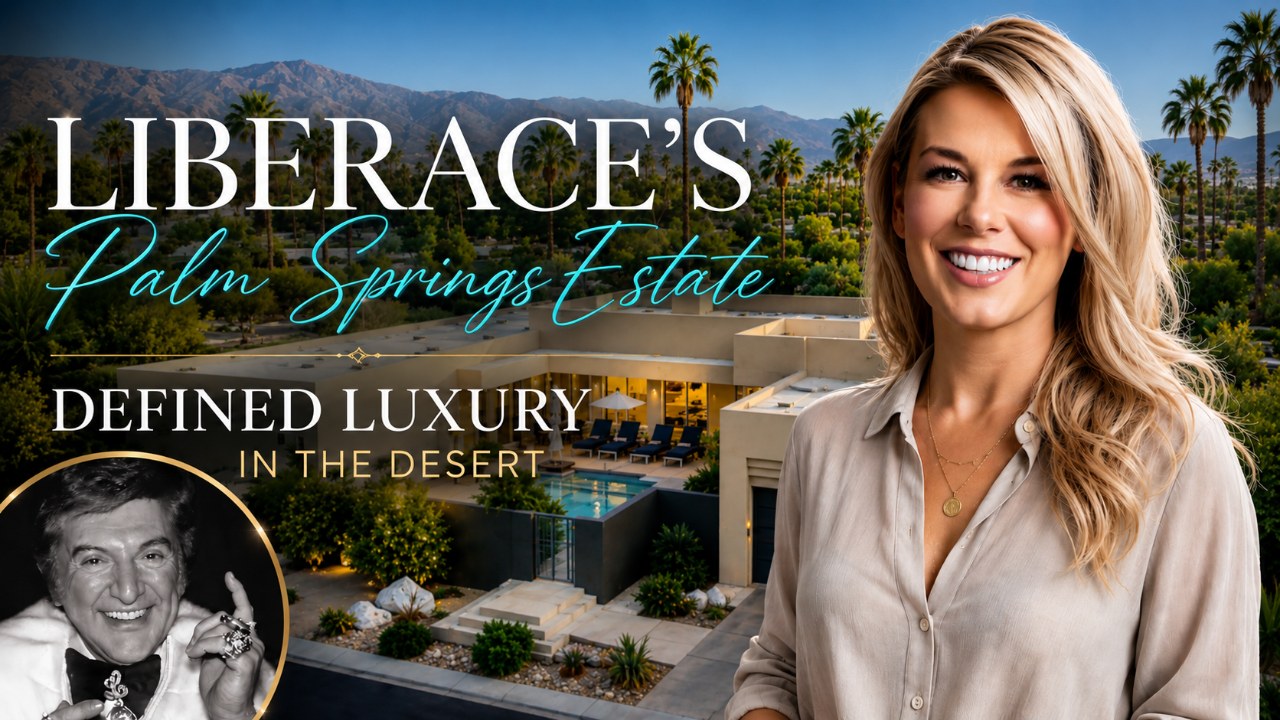
Liberace's Palm Springs Mansion Was Exactly What You'd Expect — And Then Some
What was Liberace's Palm Springs house like, and where was the famous candelabra pool?
Liberace owned an estate at 501 N Belardo Road in Palm Springs featuring a swimming pool sculpted into the shape of his signature candelabra — one of the most extravagant custom pools ever built in the desert. The home's interiors matched the spectacle: mirrors on nearly every surface, custom furniture, and rooms saturated in his favourite colours of red, gold, and white.
Picture this: it's 1968, and a neighbour on Belardo Road glances over their backyard wall to see workers finishing a swimming pool unlike anything in the Coachella Valley — or anywhere else. The pool isn't rectangular. It isn't kidney-shaped. It's a candelabra. Complete with sweeping arms and a silhouette you'd recognise on any Las Vegas marquee. The man who commissioned it was Władziu Valentino Liberace, and subtlety was simply not in his vocabulary.
The Liberace Palm Springs House, Candelabra Pool, and All the Rest
Liberace's connection to Palm Springs ran deep. He used the city as his California base throughout the height of his fame in the 1960s and 70s, retreating to the desert between marathon Las Vegas residencies and concert tours. The Belardo Road property was his sanctuary — though "sanctuary" feels like an understatement for a home that functioned more like a living stage set.
Inside, the rooms read like a manifesto against restraint. Mirrors covered walls and ceilings, amplifying the light and making every space feel like the backstage dressing room of an opera house. Red velvet, gilded trim, and white lacquer furniture filled room after room. The Liberace Palm Springs house candelabra pool estate wasn't a retreat from his persona — it was his persona, expressed in tile and plaster and desert landscaping.
The candelabra pool was the centrepiece. Custom-designed to mirror the branching shape of the candelabra that had become his emblem, it was the kind of feature that stopped aerial photographers in their tracks and kept celebrity gossip columnists busy for years. In an era when Palm Springs was awash in notable celebrity homes — Sinatra's compound was not far away, Elvis and Priscilla had their honeymoon house on Chino Canyon Road — Liberace's pool managed to out-spectacle them all.
A Desert City That Made Room for Everyone
Liberace's Palm Springs years weren't just about the décor. His presence here was part of a larger story the city was quietly writing for itself throughout the mid-century era: Palm Springs as a place where people could live fully and openly in ways that weren't always possible elsewhere.
The city has long held a reputation as one of California's most welcoming destinations, and that reputation wasn't accidental — it was built, brick by brick, by the people who chose to make their lives here. Liberace was one of them. He was a fixture at the Racquet Club, a regular in the local social scene, and genuinely woven into the fabric of Palm Springs life in a way that went beyond his famous address.
By the 1980s he had relocated within the city to a home on Alejo Road, where he died in February 1987 from AIDS-related complications — a fact initially obscured in public reporting and later corrected. His death, and the city's response to it, became part of Palm Springs's evolving identity as a place of honesty, acceptance, and pride. That legacy is still visible today in the city's culture, its historic preservation efforts, and the way locals talk about their town's past.
The Candelabra Pool Estate and What It Means for Palm Springs Real Estate Today
The original Belardo Road property has changed hands and been renovated in the decades since Liberace's ownership. The candelabra pool — that singular, impossible pool — may or may not survive in its original form; the fate of custom features like that often depends on the next buyer's taste and budget. What does survive is the story, and the story matters to this market in a very specific way.
Palm Springs real estate has always traded partly on narrative. Buyers don't just purchase square footage here — they purchase a piece of a place with a genuinely wild, glamorous, complicated history. The Liberace Palm Springs house candelabra pool estate is an extreme example of something that runs through the entire market: the idea that a home here can be a full expression of who you are, uncompromised.
That's a thread you can trace from Liberace's mirrored ceilings all the way to the mid-century modern masterpieces on Vista Chino and the new-build luxury compounds in the Movie Colony neighbourhood today. Palm Springs has always attracted people who want to live with some flair. Liberace just turned the dial up further than anyone else thought to try.
What This Means For You
• Architectural individuality has real value here. Custom features — even wildly specific ones — are part of what makes Palm Springs properties distinctive and desirable. Don't dismiss a quirky pool or bold interior as a liability before understanding the market.
• Celebrity history drives buyer interest. Properties with documented connections to notable figures attract more attention and often command a premium, particularly in the luxury and second-home segments.
• Palm Springs's cultural history is a real amenity. The city's reputation as an open, expressive, historically rich destination is part of what sustains demand — and it's something no new development can manufacture from scratch.
• If you love this kind of story, explore the neighbourhood. The Movie Colony and Old Las Palmas areas — both close to Belardo Road — are home to some of the most architecturally and historically significant properties in the entire Coachella Valley. Worth a drive.
Palm Springs has never been short on characters, and Liberace was one of the finest. His house on Belardo Road was excessive, joyful, and completely sincere — just like the man himself. If you're curious about what it's like to own a piece of this city's layered, spectacular history, I'd love to show you around. Reach out any time and let's talk about what Palm Springs looks like today.
Ready to make your move in the Coachella Valley? Reach out to Shana Gates at Craft & Bauer. Contact Shana →
Frequently Asked Questions
Where was Liberace's Palm Springs house located?
Liberace's most famous Palm Springs home was at 501 N Belardo Road, where the iconic candelabra-shaped pool was built. By the 1980s he had moved to a separate residence on Alejo Road in Palm Springs, where he passed away in February 1987.
Does the candelabra pool still exist?
The Belardo Road property has changed ownership and been renovated multiple times since Liberace's era, and the current state of the original candelabra pool is not publicly confirmed. Custom features of that scale sometimes survive as preserved curiosities and sometimes get replaced during renovations — it depends entirely on the subsequent owners' vision.
Why is Liberace significant to Palm Springs history?
Beyond the spectacle of his estate, Liberace was part of the broader mid-century celebrity culture that shaped Palm Springs's identity as a glamorous, expressive, and welcoming destination. His years in the city — and the circumstances of his death there in 1987 — are woven into Palm Springs's history as an LGBTQ-welcoming community and a place where public figures could live authentically.