
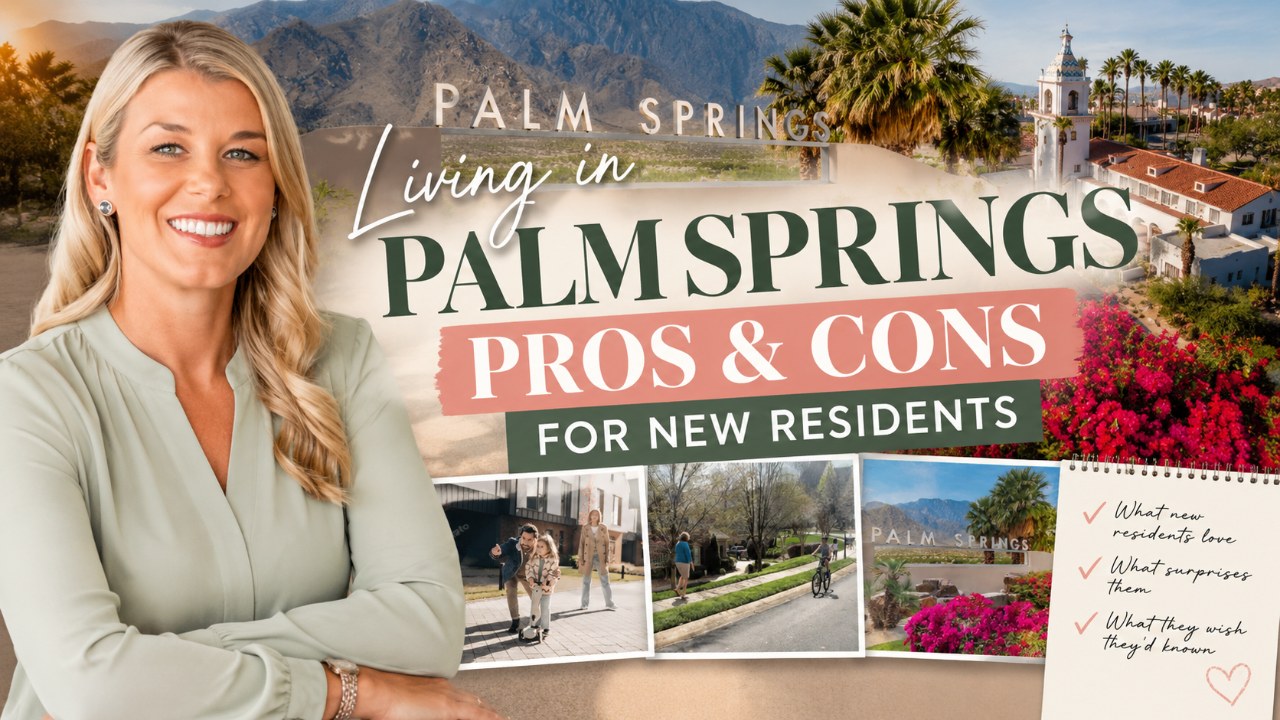
Living in Palm Springs: Pros and Cons for New Residents
Is Palm Springs a good place to live?
For the right person, absolutely — but desert living comes with real trade-offs that most relocation articles gloss over. Here's the unfiltered version.
I've helped a lot of people make the move to Palm Springs, and the ones who thrive here all had one thing in common: they did their homework. So let me give you mine. This is an honest look at the living in Palm Springs pros cons equation — the things you'll love, the things that will catch you off guard, and the practical adjustments that make it all work.
The Pros: Why People Fall in Love With Desert Living
Sun, space, and a landscape unlike anywhere else. Palm Springs averages more than 350 sunny days a year with low humidity — which means the heat, when it comes, is genuinely more bearable than a humid East Coast summer. The hiking is world-class: trails like the Palms to Pines corridor and the aerial tramway to the San Jacinto Mountains are practically in your backyard. The low-density layout gives you room to breathe in a way that coastal California simply doesn't.
Architecture, culture, and a calendar that never quits. Mid-century modern architecture isn't just a design trend here — it's the fabric of the city. Neighborhoods like Vista Las Palmas and The Movie Colony are living museums. Layer on top of that Modernism Week, the Coachella and Stagecoach festivals, the BNP Paribas Open in nearby Indian Wells, and you've got a cultural calendar most cities ten times the size would envy. For those relocating from states without income tax reciprocity, it's worth noting California does tax income — but the overall cost of living relative to coastal CA markets is meaningfully lower.
The Cons: What New Residents Wish They'd Known
The heat is real, and summer is its own season. From late June through September, temperatures routinely hit 110–115°F, with spikes above 120°F possible. This isn't a minor inconvenience — it restructures your daily life. Errands happen early morning or after sunset. Your car becomes an oven in minutes. Outdoor exercise shifts indoors or to pre-dawn hours. Most full-time residents genuinely embrace this rhythm, but it takes an adjustment period. Budget for higher electricity bills in summer; cooling a desert home is not cheap.
Monsoon season and distance from the coast. July and August bring monsoon moisture from the Gulf of Mexico, which means occasional flash flood risks in wash areas and mountain canyons. It's not a daily hazard, but it's worth knowing before you buy near a dry riverbed. And if coastal beaches are part of your lifestyle, Palm Springs sits roughly two hours from the Pacific — doable for a weekend trip, not a quick afternoon jaunt. Peak-season traffic on Highway 111 and the 10 freeway can add significant time during winter weekends when snowbirds are in town.
HOA rules and seasonal dynamics. Many Palm Springs communities carry HOAs with strict rules around landscaping, exterior modifications, and short-term rentals. If you're considering using your home as a vacation rental, Palm Springs does allow STRs with a permit and TOT (transient occupancy tax) compliance — but regulations evolve, so verify current rules before you buy with that goal in mind.
What This Means For You
• Summer adaptation is learnable. Build your schedule around the heat, invest in good window film or solar shading, and your first summer stops feeling brutal by your second.
• The snowbird calendar matters. If you're buying a primary residence, you'll want to plan around November–April peak season — more traffic, higher energy, but also more open restaurants, events, and community activity.
• Know your HOA before you close. Request and read the CC&Rs carefully. Some communities restrict short-term rentals entirely; others have specific landscaping requirements that affect your costs and flexibility.
• The living in Palm Springs pros cons calculus changes depending on your priorities. If sunshine, outdoor access, architecture, and a slower coastal pace appeal to you, it's hard to beat. If you need beach proximity or prefer four distinct seasons, go in with eyes open.
Desert living rewards people who lean into it. The residents who struggle are usually the ones who move here expecting it to feel like somewhere else. Embrace the rhythm — early mornings, afternoon shade, and long golden evenings — and Palm Springs has a way of becoming the place you can't imagine leaving.
Ready to make your move in the Coachella Valley? Reach out to Shana Gates at Craft & Bauer — she knows this market inside and out. Contact Shana →
Frequently Asked Questions
How hot does Palm Springs actually get in summer?
Palm Springs regularly sees temperatures between 110–115°F from late June through early September, with occasional spikes above 120°F during heat events. Most full-time residents adapt by shifting outdoor activities to early morning and evening hours, and summer electricity bills reflect the cost of keeping a home cool in those conditions.
Is Palm Springs a good place to live year-round, or just as a second home?
Palm Springs works well as both, but the experience is different. Year-round residents build their lives around the summer heat cycle and enjoy a quieter, more community-oriented off-season. Second-home owners and snowbirds typically visit November through April, when the weather is ideal and the city is at its most active. Understanding that seasonal rhythm is key to making either arrangement work.
Can I rent out my Palm Springs home on Airbnb or VRBO?
Palm Springs does permit short-term rentals, but hosts must obtain a vacation rental permit and collect and remit Transient Occupancy Tax (TOT). Regulations — including permit caps and operational rules — are updated periodically, so it's essential to verify current city requirements before purchasing a property with STR income in mind. An experienced local agent can walk you through what's currently allowed in any specific neighborhood.