
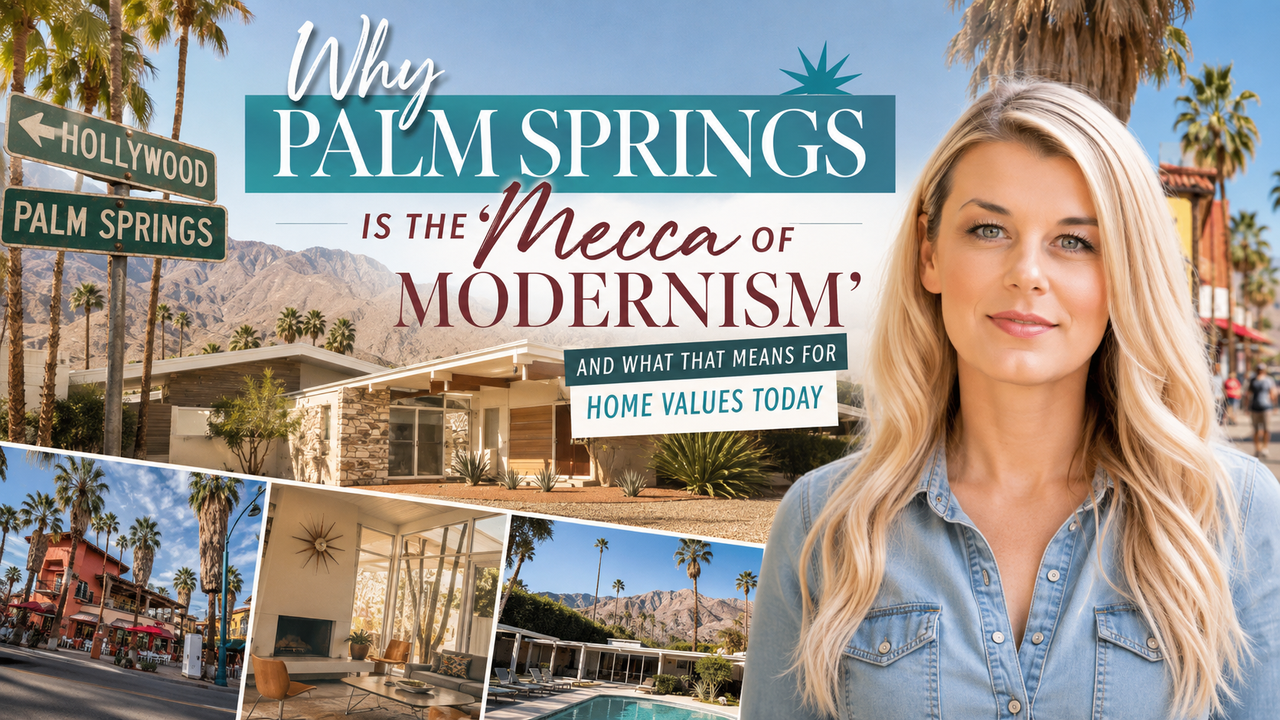
Why Palm Springs Is the 'Mecca of Modernism' — And What That Means for Home Values Today
Palm Springs is widely called the Mecca of Modernism for good reason: the city holds one of the largest concentrations of intact midcentury modern residential architecture anywhere in the world. That distinction shapes buyer demand, property values, and your experience as a homeowner in ways that are worth understanding before you buy, sell, or renovate.
How Palm Springs Earned That Title
The city's architectural story runs deep. The Agua Caliente Band of Cahuilla Indians called this land home for centuries before the first non-Indian settlers arrived in the late 1800s. By the 1930s, Palm Springs had become a winter retreat for Hollywood royalty, with neighborhoods like Old Las Palmas, the Movie Colony, and the Tennis Club quarter taking shape around that era.
After World War II, architects like William Krisel, Donald Wexler, and Albert Frey transformed the desert landscape with flat roofs, clerestory windows, post-and-beam construction, and butterfly rooflines. Those homes were built for the climate, and thousands of them are still standing. The city's recognition as a Preserve America community cemented its commitment to protecting that legacy. Modernism Week, which drew 5,600 visitors as far back as 2008, now pulls tens of thousands annually from around the world, reinforcing Palm Springs as a destination specifically because of its architecture.
What Historic and Architectural Recognition Does to Property Values
Designation cuts both ways, and buyers should understand that before making an offer on a historic property.
On the upside, homes in historically recognized neighborhoods like Old Las Palmas or the Movie Colony carry a premium tied to their provenance and scarcity. Buyers pay for authenticity. A well-preserved Alexander home with original features will consistently attract more competitive offers than a comparable square footage that has been heavily altered. If you own one of these homes, that story is part of your asset. Find out what your home is worth →
On the downside, Class 1 historic designations in Palm Springs come with design review requirements. You cannot replace original windows with vinyl, repaint without approval, or add a room addition without going through the Historic Site Preservation Board. Renovation costs run higher when materials must match the original period. Buyers who don't account for that going in sometimes get surprised.
The net effect for investors is that demand for authentic midcentury properties holds firm even when the broader market softens, because the buyer pool is global, not just local. That insulates these properties somewhat, though no property is immune to rate and inventory shifts. Find out what your home is worth →
What This Means For You
• If you are buying a historic-designated property in Palm Springs, request the full designation class and any past Historic Site Preservation Board conditions before closing. Class 1 and Class 2 carry different restrictions.
• Renovation budgets on architecturally significant homes should include a 15-20% buffer for period-appropriate materials and design review timelines.
• Undesignated midcentury homes in Palm Springs can still command a premium if original features are intact, even without formal protection. Condition and authenticity matter to this buyer pool.
• Modernism Week traffic and global press coverage sustain year-round interest in Palm Springs architecture. That visibility supports short-term rental demand and resale appeal in ways that benefit owners of well-maintained midcentury properties.
If you are weighing a midcentury purchase anywhere in the Coachella Valley, explore the Palm Springs community page for current listings and neighborhood context.
Palm Springs built its identity on a very specific architectural moment in time, and the market reflects that. Knowing the preservation framework before you buy or renovate helps you protect what you paid for.
*Shana Gates | Craft & Bauer, Real Broker. Have questions about midcentury properties in the Coachella Valley? I'm happy to talk through what you're looking at.*
Frequently Asked Questions
Does historic designation in Palm Springs lower or raise home values?
For well-preserved properties, historic designation tends to support or raise values because it creates scarcity and appeals to a motivated global buyer pool. The trade-off is that design review requirements can increase renovation costs and timelines, which some buyers factor into their offer price.
What is Modernism Week and how does it affect the Palm Springs real estate market?
Modernism Week is an annual event celebrating midcentury architecture, design, and culture in Palm Springs. It draws visitors from around the world and generates significant press coverage that keeps Palm Springs architecture in front of a global audience year-round. That sustained visibility helps maintain buyer interest and short-term rental demand for architecturally significant properties.
Can I renovate a midcentury modern home in Palm Springs without historic approval?
It depends on the property's designation class. Class 1 historic sites require Historic Site Preservation Board approval for exterior changes, including materials, colors, and additions. Class 2 properties have lighter oversight. Non-designated homes have no formal review process, though some homeowners choose to follow period guidelines to protect resale value. Always confirm the designation status during due diligence.
Related reading
• New ADU Rules in 2026: Can Coachella Valley Homeowners Now Build Two Detached Units?
• FAIR Plan Rates Jumping 29.1% in October: What Coachella Valley Homeowners on the Plan Should Do Now
• Cotino by Disney Just Added 6 New Tenants — Here's What's Coming to Rancho Mirage