
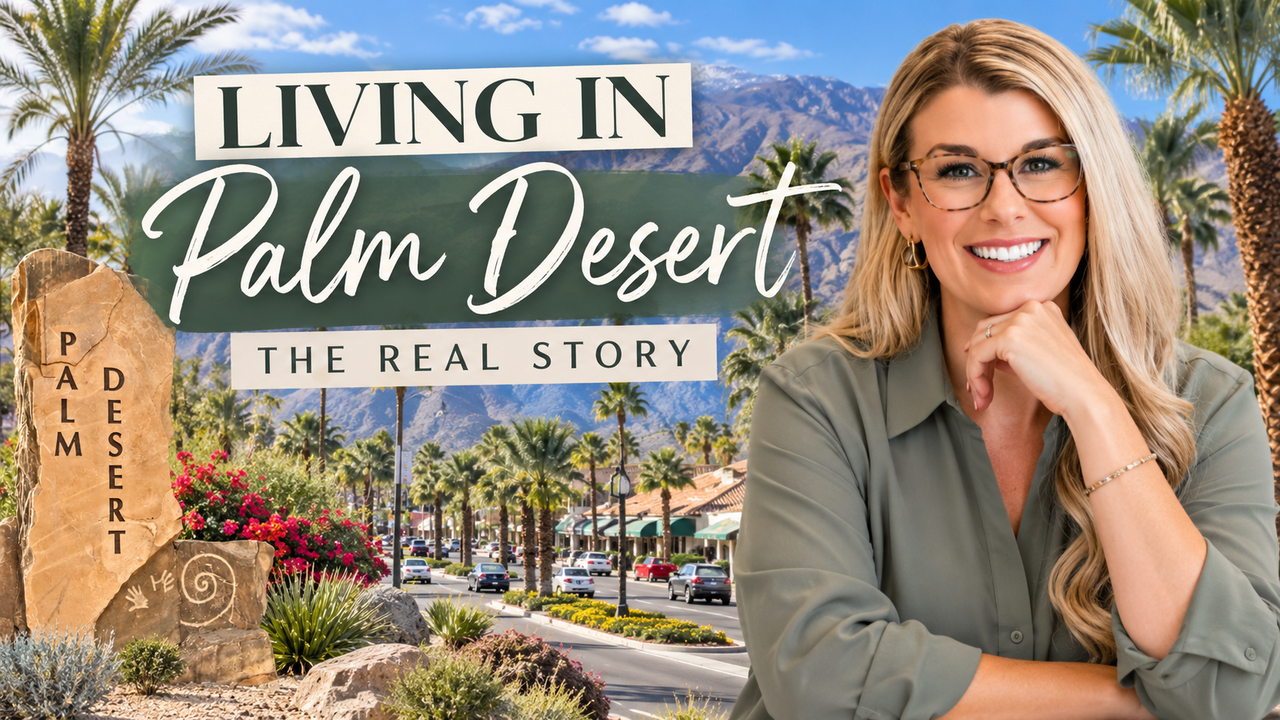
What it's really like to live in Palm Desert is probably different from what you've seen on a travel blog. This is a working city, not a resort town. About 53,000 people live here year-round, and the rhythms of daily life shift dramatically between summer and fall.
Daily Life in Palm Desert
Palm Desert sits between the quieter, more residential communities to the east and the busier tourist corridor near Palm Springs to the west. El Paseo, the city's main shopping and dining street, draws comparisons to Rodeo Drive, but the pace is slower and more local. You can run errands, grab coffee, and catch a gallery opening all within a few blocks. The College of the Desert hosts a popular outdoor farmers market on Saturday and Sunday mornings that draws a consistent local crowd year-round.
The desert heat between June and September is real and worth understanding before you commit. Daytime temperatures regularly exceed 110°F. Most residents structure outdoor activity around early mornings, and the city largely quiets down during peak summer months. Utility costs rise accordingly. The flip side is that fall through spring is genuinely outstanding, with mild days, clear skies, and a full calendar of outdoor events, concerts, and festivals across the valley.
What the Community Actually Looks Like
Palm Desert has a strong arts presence. The Palm Springs Art Museum has a satellite location on El Paseo, and the city funds public art installations throughout its medians and parks. The McCallum Theatre hosts national touring productions and local performances throughout the season, which typically runs October through May.
The city invests heavily in its parks and trail system. The Bump and Grind Trail off Highway 74 is a popular morning destination for hikers and offers views across the valley floor. Civic Center Park includes tennis courts, a skate park, an aquatic center, and open lawn space.
Schools in the city fall under the Desert Sands Unified School District. Lincoln Elementary School is rated 6/10 by GreatSchools.org, and Palm Desert High School is rated 7/10 by the same source (2024 data).
What This Means For You
• Summer is slow and hot. If you work remotely or travel in summer, that works in your favor. If you need year-round outdoor access, factor that into your decision.
• Inventory in Palm Desert tends to move faster in the fall when seasonal buyers return. Timing your search matters.
• Prices vary significantly by neighborhood. Gated golf communities carry premium prices, while neighborhoods north of Cook Street offer more accessible entry points.
• Homeowners with equity in Palm Desert have benefited from steady appreciation over the past several years. Find out what your home is worth →
Palm Desert is a city with genuine infrastructure, a consistent cultural calendar, and a community that functions well outside of tourist season. It rewards people who take time to understand its seasonal patterns. For a broader look at how Palm Desert compares to other communities across the valley, visit the Craft & Bauer blog.
Frequently Asked Questions
Is Palm Desert expensive to live in compared to other Coachella Valley cities?
Palm Desert sits in the mid-to-upper range for home prices in the valley. According to the California Association of Realtors, Coachella Valley median prices vary significantly by city, with Indian Wells and Rancho Mirage typically higher and Indio and Coachella lower. Palm Desert offers a range of price points depending on whether you're looking at gated golf communities or standard residential neighborhoods.
What is the summer heat like for full-time residents in Palm Desert?
Summer temperatures from June through September regularly reach 110°F to 115°F during peak heat. Most full-time residents shift their outdoor schedules to early mornings and evenings, and utility bills for cooling increase substantially during those months. Many residents plan travel during the hottest weeks, which is a common pattern across the valley.
How does Palm Desert differ from Palm Springs as a place to live?
Palm Springs has a denser, more walkable downtown core with a stronger tourism-driven economy. Palm Desert functions more as a full-service residential city, with larger retail corridors, a hospital, a community college, and neighborhoods that cater to year-round daily life. The two cities are about 15 miles apart and offer meaningfully different day-to-day experiences.
Related reading
• Venezuelan Op Art Takes Over Heather James Fine Art in Palm Desert — A Must-See Exhibition
• Pedestrian Safety in the Coachella Valley: What Every Resident Should Know