
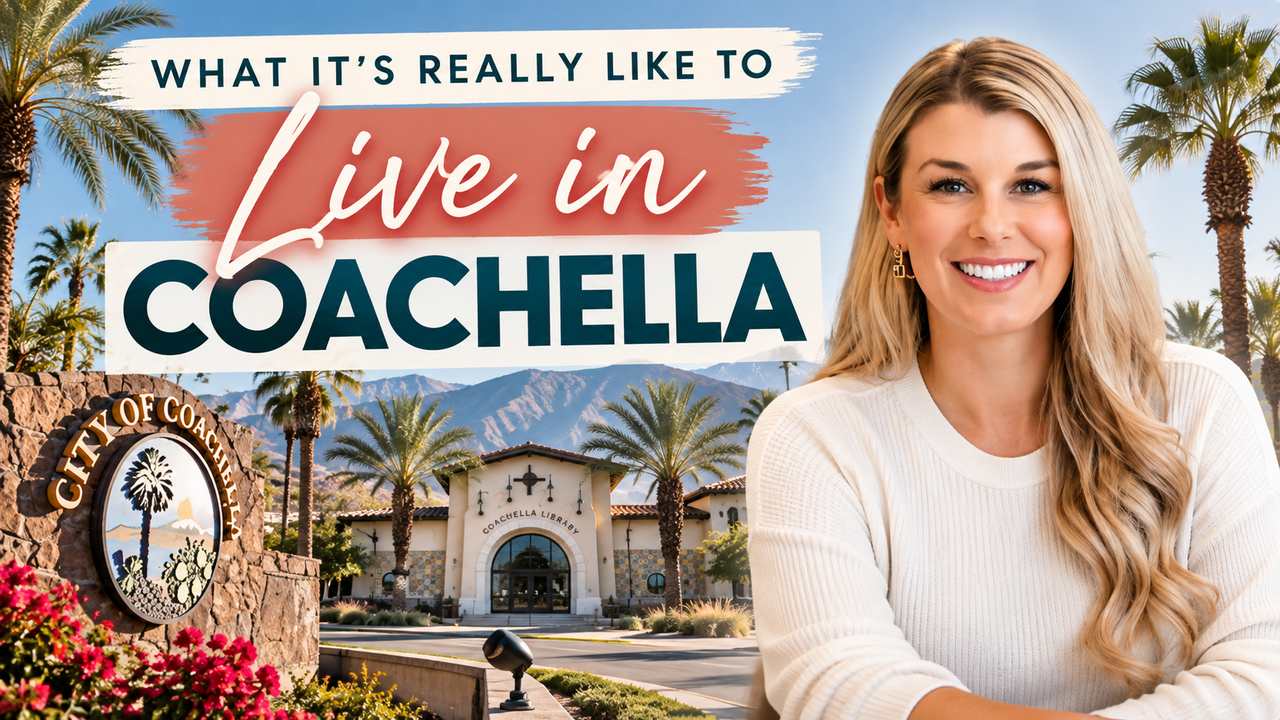
What it's really like to live in Coachella is different from what most people picture. The city is not just a concert venue backdrop. It's a real community of roughly 45,000 residents, lower median home prices than most of the valley, and a cultural identity rooted in agriculture, local arts, and decades of close-knit neighborhood life.
Daily Life in Coachella
Coachella sits at the eastern end of the valley, which means a longer drive if your job is in Palm Springs or Palm Desert, but also more space for your dollar. The city center along Avenue 48 and Highway 111 holds grocery stores, local restaurants, a library, and city parks. Residents who commute west on I-10 typically budget 25 to 40 minutes depending on the destination.
Summer heat is a real factor. Coachella sits inland, and daytime highs regularly reach 112°F or above from late June through August. Utility costs go up, and outdoor activity shifts to early mornings. That's the honest trade-off for lower housing prices and more square footage than you'd find closer to the valley's western cities.
Housing Costs and What You Get
Coachella has consistently ranked among the most affordable cities in the Coachella Valley for homebuyers. As of early 2025, median sale prices in Coachella have run 30 to 40 percent below Palm Springs medians, with many single-family homes still available under $400,000. Lot sizes tend to be generous, and newer subdivisions in areas like Merano and Canterra have brought more modern floor plans to the market at accessible price points.
If you own a home in Coachella and are wondering what it's worth in today's market, Find out what your home is worth →
For more on how Coachella compares to other eastern valley cities, see our blog for neighborhood breakdowns across the region.
Schools in the area fall under the Coachella Valley Unified School District. Individual school ratings vary, so reviewing current scores at GreatSchools.org is worth doing before committing to a specific street or subdivision.
What This Means For You
• Coachella offers some of the lowest entry-level home prices in the valley, which matters if you're stretching a budget or want more square footage.
• Commute times to western valley employment centers are real and worth factoring into your monthly cost of ownership.
• Summer utility bills can add $300 to $500 per month during peak months, so ask about insulation, roof age, and HVAC condition when buying.
• The city is growing, and new commercial and infrastructure investment is following that population increase, which affects long-term property values.
What it's really like to live in Coachella comes down to this: lower costs, more space, intense summers, and a community with a character that doesn't get enough credit. For buyers who prioritize value and aren't tied to the valley's western corridor, it's worth a serious look.
Frequently Asked Questions
Is Coachella affordable compared to other Coachella Valley cities?
Yes. Coachella has carried some of the lowest median home prices in the valley for several years running. Buyers can find single-family homes with larger lots at price points that aren't available in Palm Springs, La Quinta, or Rancho Mirage.
How hot does it get in Coachella in the summer?
Coachella sits at the eastern, more inland end of the valley, and summer highs regularly exceed 110°F from late June through early September. Most residents run air conditioning around the clock during those months, which raises utility costs substantially.
What is the Coachella real estate market doing right now?
Coachella has seen steady buyer interest driven by affordability, particularly from first-time buyers and those relocating from higher-cost California metros. If you own property in Coachella and want a current value estimate, Find out what your home is worth →
Related reading
• What It's Really Like to Live in Palm Desert
• Venezuelan Op Art Takes Over Heather James Fine Art in Palm Desert — A Must-See Exhibition