
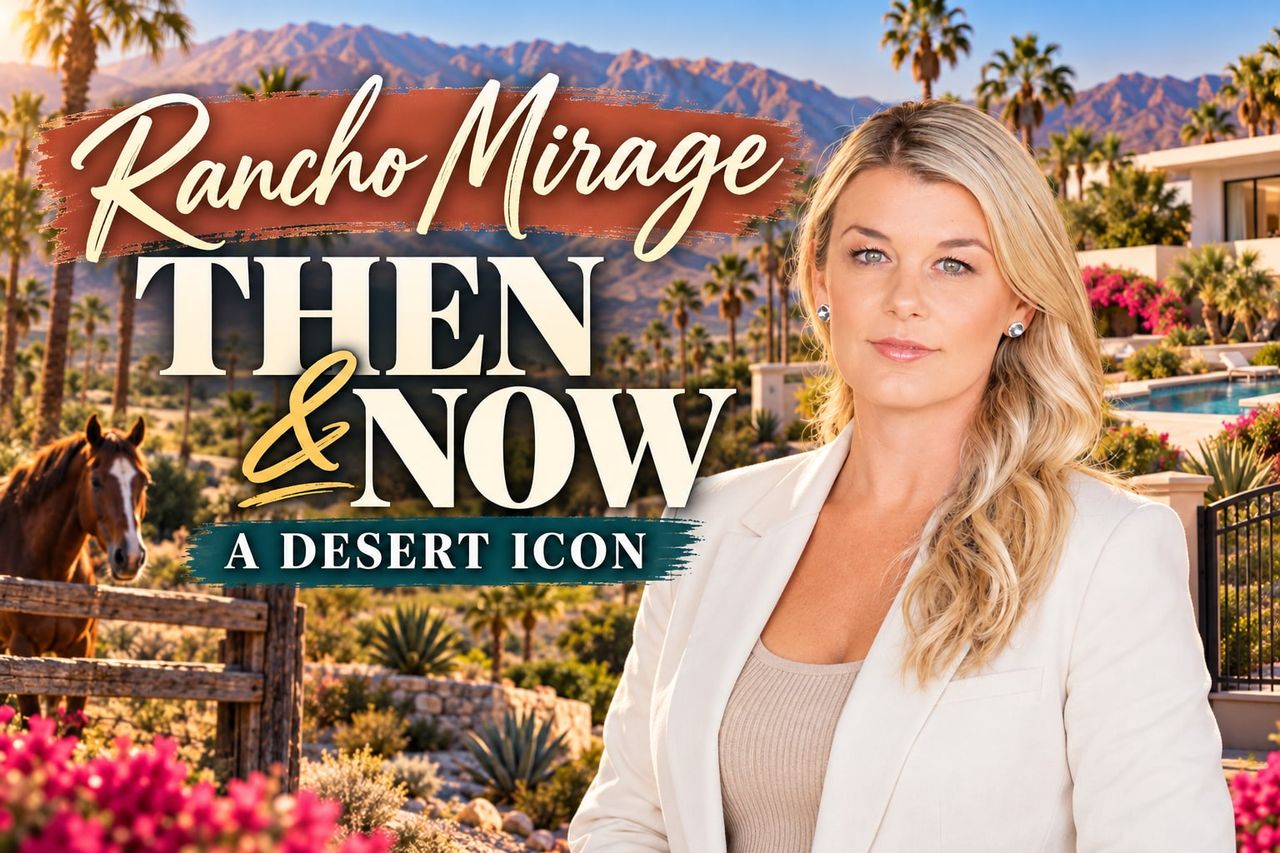
In the late 1940s, the land southeast of Palm Springs was still being farmed. Date palms, citrus groves, and working ranches covered the desert floor where manicured fairways and walled estates would eventually stand. The postwar boom that reshaped so much of Southern California also found its way here, and a handful of agricultural ranch owners made a quiet but consequential decision: convert their land into guest ranches for visitors chasing sunshine and open space.
That decision set the Rancho Mirage history in motion.
How Postwar Tourism Planted the Seed
After World War II, Americans had money to spend and a fierce appetite for leisure. Tourism across the Southwest surged, and the Coachella Valley became a genuine destination. Palm Springs was already famous, attracting film industry regulars and wealthy Angelenos, but the land further southeast was quieter, more open, and appealing in a different way.
Several ranch owners converted their properties into guest operations during the late 1940s, welcoming visitors who came for horseback riding, fresh air, and the kind of low-key desert lifestyle that felt like an antidote to urban life. Those early guest ranches gave the area its name. "Rancho Mirage" captured both the working-ranch character of the land and the shimmering, almost dreamlike quality of the desert heat.
The visitors who came for a week often came back for a season. Some eventually bought land and stayed.
Celebrity Retreats and the Making of a Reputation
Through the 1950s and into the 1960s, the area around Rancho Mirage built a reputation as a retreat for people who wanted privacy alongside the desert lifestyle. Its location offered both proximity to Palm Springs and enough distance from it to feel removed from the scene.
President Dwight D. Eisenhower played golf at what is now Thunderbird Country Club, one of the valley's early private clubs and a key anchor for the area's identity as a place where serious people came to relax seriously. The club opened in 1951 and became a magnet for political figures, entertainers, and business leaders who valued discretion along with the fairways. According to the City of Rancho Mirage, this era of high-profile residents helped shape the city's enduring character.
Frank Sinatra, Bob Hope, Gerald Ford, and Walter Annenberg all had homes in or near Rancho Mirage. Ford spent his post-presidential years here. Annenberg's Sunnylands estate, completed in 1966, became a private diplomatic retreat that hosted heads of state from around the world. These weren't just celebrity cameos. These were people who chose Rancho Mirage as a permanent or semi-permanent home, and their presence compounded the area's reputation decade by decade.
Incorporation and the Push for Self-Governance
Rancho Mirage incorporated as a city on January 1, 1973. That move was deliberate. Residents and property owners wanted local control over land use and development, and incorporating gave them that power at a critical moment, right as the Coachella Valley was growing fast.
The newly formed city government moved quickly to establish the planning framework that still defines Rancho Mirage today: limited commercial density, carefully controlled development, and a strong emphasis on maintaining the resort character that had made the area distinctive in the first place. The City of Rancho Mirage marked its 50th anniversary in 2023, commemorated with a book produced by the city's marketing team in collaboration with Desert Publications. That milestone is a useful reminder of how recent this transformation actually is. Within a single lifetime, working ranch land became one of the most carefully planned residential communities in the Coachella Valley.
Why Rancho Mirage History Still Matters to Today's Buyers and Investors
Understanding the Rancho Mirage history is not just interesting trivia. It explains why the city looks and feels the way it does, and why that character has proven durable.
The golf courses, the private clubs, the low-slung architecture set back from wide medians, the absence of strip malls cluttering the main corridor on Highway 111 — none of that happened accidentally. It reflects decades of consistent planning decisions made by a city that knew what it wanted to be from the start.
For buyers, that consistency matters. Communities with a clearly established identity and strong local governance tend to protect property values better over time than areas without that foundation. For investors, Rancho Mirage offers a track record. The same qualities that drew postwar tourists and mid-century celebrities still draw buyers today: privacy, desert beauty, and a sense that the city takes its own character seriously.
If you want to dig deeper into what Rancho Mirage looks like for buyers right now, the Rancho Mirage community page is a good place to start.
Frequently Asked Questions
When did Rancho Mirage become a city?
Rancho Mirage incorporated as an official city on January 1, 1973. Before incorporation, the area operated as an unincorporated community within Riverside County. The city celebrated its 50th anniversary in 2023.
Why is it called Rancho Mirage?
The name reflects both the agricultural ranch history of the land in the mid-20th century and the shimmering, mirage-like quality of the desert landscape. Several working ranches converted into guest ranches after World War II, and the name stuck as the area developed into a residential community.
What famous residents have lived in Rancho Mirage?
Rancho Mirage has been home to President Gerald Ford, Frank Sinatra, Bob Hope, and Walter Annenberg, among others. President Dwight D. Eisenhower was a frequent visitor who played golf at Thunderbird Country Club. Annenberg's Sunnylands estate hosted multiple world leaders and U.S. presidents over several decades.
---
*Shana Gates is a Coachella Valley real estate advisor with Craft & Bauer | Real Broker. She covers the full valley, from Desert Hot Springs to La Quinta, and has spent years helping buyers and investors understand not just the market but the communities behind it. If you have questions about the valley's history or its neighborhoods, she's always glad to talk.*
Sources
• Sunnylands (The Annenberg Retreat)
Related reading
• 60 Years of JFK Memorial Hospital: The Coachella Valley Institution Most Locals Take for Granted
• La Quinta Resort Turns 100: The History Behind the Coachella Valley's Most Iconic Retreat
• How Coachella Transformed Indio From a Quiet Desert Town Into a Global Music Destination